
What Are Invisalign Attachments and Why Might You Need Them?
Quick answer
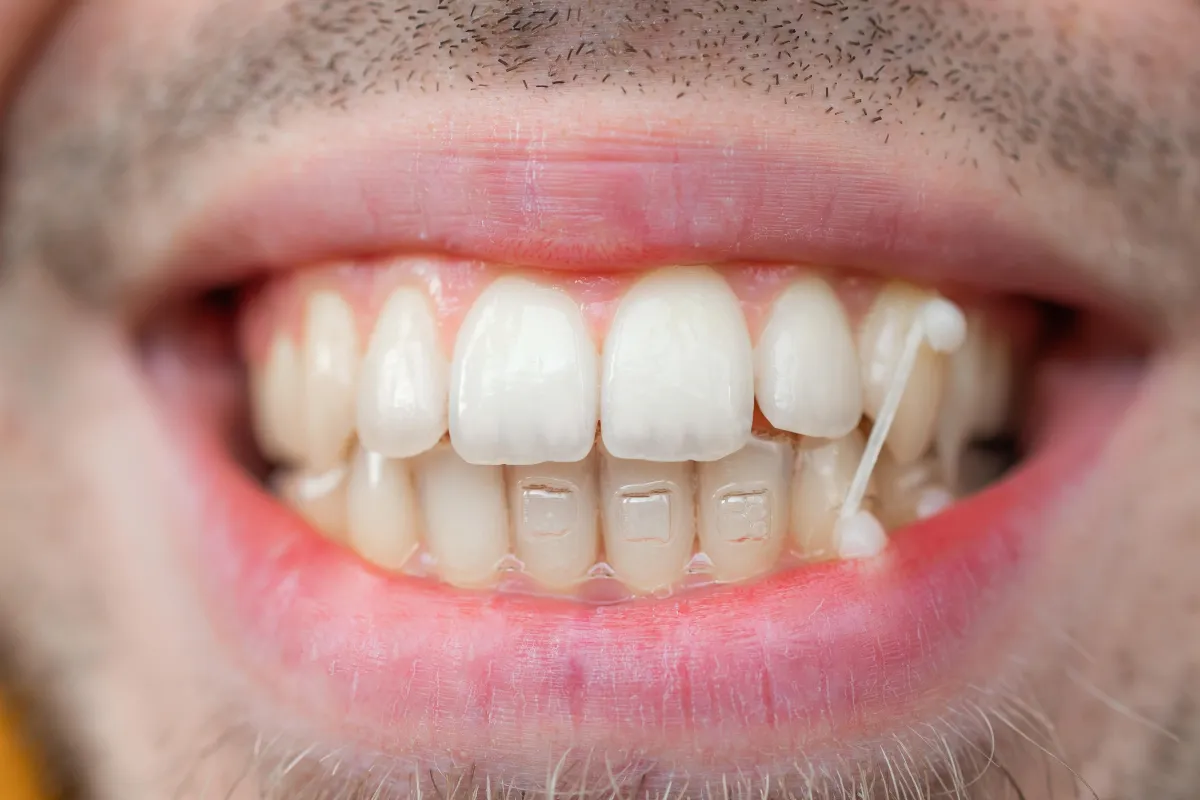
Invisalign attachments are small tooth-colored composite bumps bonded to certain teeth to give your aligners extra grip, helping them make more complex and precise tooth movements during treatment.
Key takeaways
1. Attachments are tiny tooth-colored bumps that help aligners grip and move teeth more precisely.
2. Not every patient needs them; they depend on the movements your plan requires.
3. They are placed painlessly and removed at the end of treatment without harming healthy enamel.
4. Wear your aligners about 24 hours a day and keep attachments clean to avoid staining.
5. A local Bakersfield consultation is the best way to know if attachments fit your plan.
What Are Invisalign Attachments?
Invisalign attachments are small, tooth-colored composite bumps bonded to specific teeth to help your clear aligners grip and move them more effectively. They act like tiny handles, giving the plastic something to push against so it can deliver more precise, controlled movement than the aligner alone could achieve.
The short definition
Think of an attachment as a discreet anchor. The aligner is smooth on its own, so certain movements can be hard for it to accomplish. A strategically placed bump lets the aligner engage the tooth from a better angle, translating your daily wear into real progress.
Attachments vs. buttons: what's the difference?
People often use the words interchangeably, but they are not identical. Attachments are the small composite shapes bonded directly to the enamel and hidden under the aligner. Invisalign buttons are small anchor points used to hook elastics when extra force is needed to correct bite alignment. Both are tooth-colored and temporary, but attachments guide the aligner while buttons hold elastics.
How Invisalign Attachments Work
Attachments work by giving your aligners more surface to hold onto, which lets them apply force in specific directions. Without them, a smooth aligner can slip over a rounded tooth; with them, the aligner locks into the shape and moves the tooth exactly as planned.
The role of tooth-colored composite bumps
Each attachment is made from the same tooth-colored composite resin used for many routine bonding procedures. Because the material closely matches enamel, most attachments blend in well and stay quietly out of sight during everyday conversation.
How aligners grip attachments to move teeth
Your aligners are custom-molded with small pockets that fit precisely over each attachment. When you seat the tray, those pockets press against the bumps and redirect force to rotate, tip, or lift a tooth. This grip is a big reason aligners can handle movements that once seemed possible only with braces. Research on clear aligner therapy notes that attachments improve the tray's engagement with the tooth surface, supporting better control of movement, as described in a comprehensive review of clear aligner attachments, which explains that the shape, size, and placement of these attachments all play a role in how well a tray grips a tooth and carries out the intended movement. The review also points out that fully seating the aligner is what allows those pockets to do their job, since a tray that is not snug cannot transfer force to the attachment the way it was designed to.
Types and shapes of attachments
Attachments come in different shapes because different teeth need different pushes. Common forms include rectangular, ellipsoidal, and beveled or optimized shapes designed for specific movements.
Rectangular Attachments: Help provide straightforward retention and grip.
Beveled Attachments: Direct force to help lift or rotate a tooth.
Optimized Attachments: Strategically placed by the software to support specific planned tooth movements.
Why Might You Need Invisalign Attachments?
You might need attachments when your treatment plan calls for movements that a smooth aligner cannot reliably achieve, such as rotating a round tooth or lifting one into a better position. Your provider decides based on the specific corrections your smile requires.
Complex tooth movements they enable
Certain teeth are naturally hard to move. Canines and premolars are rounded so that aligners can slip without extra grip. Attachments solve this by giving the tray a defined edge to engage, making difficult movements far more predictable.
Rotations, extrusions, and intrusions
Three movements commonly rely on attachments. Rotations turn a twisted tooth into alignment, extrusions gently pull a short-appearingtooth down, and intrusions push an overly long tooth up. Each of these needs precise directional force that attachments help deliver.
Not everyone needs them: who does and who doesn't
Not every patient gets attachments. Mild crowding or small spacing corrections may need only a few, or sometimes none. More involved cases usually require several. Your dentist tailors the number and placement to your goals, so two patients with similar-looking smiles can end up with very different plans.
A note from Dr. Altavas
"I tell every patient the same thing: attachments are not a sign your case is harder; they are a tool that makes your result more predictable. When I place them thoughtfully, I can move teeth I simply could not move with the aligner alone."
Do Attachments Improve Treatment Results?
Yes, attachments generally improve the accuracy and predictability of tooth movement, which is why they are so widely used. They help the aligner do exactly what the digital plan intends, reducing the chance of a tooth lagging behind.
What the research says about effectiveness
Studies on clear aligner therapy support the role of attachments in achieving planned movements. A systematic review of aligner treatment found that outcomes are more predictable when the aligner can grip the tooth effectively, which is precisely what attachments provide, according to a systematic review of Invisalign effectiveness, which found aligners work reliably for mild to moderate cases but are less predictable for more complex movements.
Impact on treatment predictability and time
By improving grip, attachments help keep treatment on schedule. When each tray tracks well, you are less likely to need extra corrective trays. Research also examined how attachments affect patient adaptation and daily comfort, finding that they can be integrated into treatment while maintaining quality of life, as explored in a study on attachments and patient adaptability, which found that while patients felt some discomfort in the lips and cheeks right after attachments were placed, that discomfort eased within about two weeks as they adjusted.
What to Expect When Attachments Are Placed
Placing attachments is a quick, comfortable, in-office step with no drilling and no numbing needed. Your dentist bonds each bump using a precise template so it lands in exactly the right spot.
1. Clean and prepare
The tooth surfaces are gently cleaned and prepared so the composite bonds securely.
2. Load the template
A clear placement tray is filled with tooth-colored composite at each attachment location.
3. Seat and cure
The tray is pressed over your teeth, and a curing light hardens the composite in seconds.
4. Remove excess and polish
The template is removed, any extra material is cleaned away, and the bumps are smoothed.
How they feel and look
Right after placement, your teeth may feel slightly different to your tongue, and your aligners will fit more snugly. This is normal and fades within a day or two. Because the composite matches your enamel, the bumps are subtle.
Are they noticeable to others?
Most people will not notice your attachments during normal conversation, especially while your aligners are in. They are most visible on front teeth up close, but the tooth-colored resin keeps them discreet. One study comparing attachment bonding composites examined how well different materials blend for esthetics.
Living With Invisalign Attachments
Living with attachments is straightforward once you settle into a routine. Wear your aligners about 24 hours a day, keep everything clean, and the bumps quickly become part of your normal day.
1. Eating and drinking tips
Enjoy your usual meals while keeping attachments in mind. Very sticky or hard foods can put stress on the bumps, so bite carefully and chew evenly. Staying hydrated with water is always a smart choice for your smile.
2. Cleaning around attachments
Brush gently around each bump so plaque does not collect at the edges. Angle your brush to reach where the attachment meets the tooth, and floss daily to keep those margins clean.
3. Managing minor irritation
If an attachment edge feels rough against your cheek or tongue early on, it usually settles as you adjust. Orthodontic wax can temporarily smooth a sharp spot. If irritation persists, your dentist can quickly polish the edge.
- Soft-Bristled Toothbrush: Gently clean around each attachment.
- Daily Flossing: Clean carefully along the gumline.
- Water: Stay hydrated throughout the day.
- Orthodontic Wax: Use temporarily to cover a rough or irritating edge.
- Sticky Candies: Avoid foods that can tug on or loosen attachments.
- Hard Foods: Avoid biting hard items directly with teeth that have attachments.
- Colored Mouth Rinses: Limit rinses that may stain or tint the composite.
- Skipping Brushing: Clean the attachments carefully every day.
Caring for Attachments to Avoid Staining
Attachments can pick up stains from pigmented foods and drinks, so a consistent hygiene routine keeps them looking clear. Because the composite is porous, discoloration is one of the most common cosmetic complaints, and it is largely preventable.
1. Foods and drinks that cause discoloration
Coffee, tea, red wine, cola, and deeply colored sauces are the usual culprits. Enjoy them in moderation, and rinse your mouth with water afterward to reduce the time the composite is in contact with your mouth.
2. Oral hygiene routine that protects your smile
Brush at least twice a day, focusing gently on the attachment surfaces, and floss daily. Keeping your aligners clean also matters, since a cloudy tray can make bumps look darker than they are. A steady routine keeps both your teeth and attachments bright.
Getting Attachments Removed
Attachments are removed at the end of your treatment in a single, comfortable visit. Your dentist buffs away the composite and polishes the tooth so your natural surface returns.
The removal process at the end of treatment
When your teeth reach their planned positions, the bumps have done their job. Your dentist uses a polishing instrument to remove the composite gently, then smooths and polishes each tooth. There is no drilling into your natural tooth and no numbing required.
Does removal damage enamel?
Removal is designed to protect your enamel. Because attachments sit on top of the tooth rather than inside it, taking them off leaves your healthy enamel intact when done properly by a trained professional. Do not try to pick or file them off yourself, since that can scratch the surface.
Do not remove attachments yourself
Attachments are bonded to hold firm throughout treatment. Only your dentist should remove them, using proper polishing tools. Attempting it at home risks damaging your enamel and your progress.
Considering Invisalign in Bakersfield, CA
If you are considering Invisalign in Bakersfield, the best first step is to consult a local dentist who can examine your smile and explain whether attachments are a good fit for your treatment plan. A personalized exam beats guessing from online photos.
When to consult a local dentist
Schedule a visit if you have crowding, spacing, or bite concerns and want a discreet option. Your dentist will map out your movements and show you where attachments would help. You can learn more on our Invisalign page or call our Bakersfield office at 661-246-4322. Check our Google Maps link here.
Questions to ask at your consultation
1. Attachment Needs: Ask whether attachments are required and approximately how many may be used.
2. Placement & Visibility: Find out where the attachments will be placed and how noticeable they may be.
3. Treatment Timeline: Ask about the estimated length of your treatment.
4. Daily Wear Routine: Understand how long and how consistently you should wear your aligners each day.
Frequently asked questions
Q: Do all Invisalign patients need attachments?
No. Attachments are used only when your treatment plan calls for movements that need extra grip. Milder cases may require just a few or none, while more complex cases often need several. Your dentist makes the decision based on your specific corrections.
Q: Are Invisalign attachments noticeable?
Most attachments are discreet because they are made of tooth-colored composite that blends with your enamel. They are least visible while your aligners are in and most noticeable up close on front teeth, but everyday conversation rarely reveals them.
Q: Do Invisalign attachments hurt?
Placing attachments does not hurt, since there is no drilling or numbing involved. Your aligners may feel snugger and your teeth slightly different for a day or two afterward, which is normal and fades quickly as you adjust.
Q: Can you take Invisalign attachments off yourself?
No. Attachments are firmly bonded and should only be removed by your dentist using proper polishing tools. Trying to pick or file them off at home can scratch your enamel and disrupt your treatment progress.
Q: How long do Invisalign attachments stay on?
Attachments stay on for the duration of your active treatment, which varies by case. They remain bonded until your teeth reach their planned positions, then your dentist removes and polishes them at your final appointment.
Q: Do attachments make Invisalign work faster?
Attachments mainly make treatment more predictable rather than simply faster. By helping aligners grip and move teeth accurately, they reduce the chance of a tooth lagging, which can help keep your overall treatment on schedule.
Meet Dr. Myrna Altavas
“Your smile is my passion, your comfort is my priority.”
With more than 20 years of experience, Dr. Myrna Altavas, a Gold+ Invisalign Provider, has proudly served the Bakersfield community with compassionate, personalized dental care. She combines clinical expertise with modern technology to help patients achieve healthy, confident smiles.
Since 2002, Dr. Altavas has provided general and cosmetic dentistry, Invisalign clear aligner therapy, digital imaging, and laser dentistry, all while creating a warm, comfortable environment where patients feel genuinely cared for.
Remember
Attachments are small tooth-colored bumps that help your aligners move teeth precisely, and they are removed safely at the end of treatment. Wear your aligners about 24 hours a day and keep them clean for the best result.
Disclaimer
This article is for general educational purposes only and is not a substitute for professional dental advice. Please consult a qualified dentist about your individual treatment needs.
Why Altavas is the New Standard for Invisalign
• Diamond-Level Expertise: We don't just "do" Invisalign; we specialize in it. Dr. Myrna Altavas is a top-tier provider.
• Digital Precision: No goopy impressions. We use advanced iTero 3D scanning for instant, accurate smile modeling.
• Faster Results: Our proprietary treatment planning often reduces wear time by up to 30%.
• VIP Experience: Luxury amenities and a judgment-free environment designed for your comfort.
Patients Who Chose Us — And Loved Their Results

Contact Us
+16612464322
Plaza de Cascada
4100 Empire Drive, Suite 110
Bakersfield, CA 93309
